
 economymono_bz65a7
Medley, FL 33178, United States, 13th Jul 2026 – Cloom Tech, a trusted manufacturer of custom wire harnesses and cable assemblies, has announced the development of specialised wiring solutions for humanoid robotics applications. The announcement reflects the company’s continued engineering work on wire harness systems designed to meet the mechanical and electrical demands of joint articulation, sensor integration, and power distribution in compact, multi-jointed robotic platforms. The development responds to growing interest from robotics manufacturers seeking wiring solutions capable of withstanding repeated flexing, tight routing constraints, and the mechanical stresses typical of humanoid robot designs, where wiring failures can directly affect mobility and operational reliability.
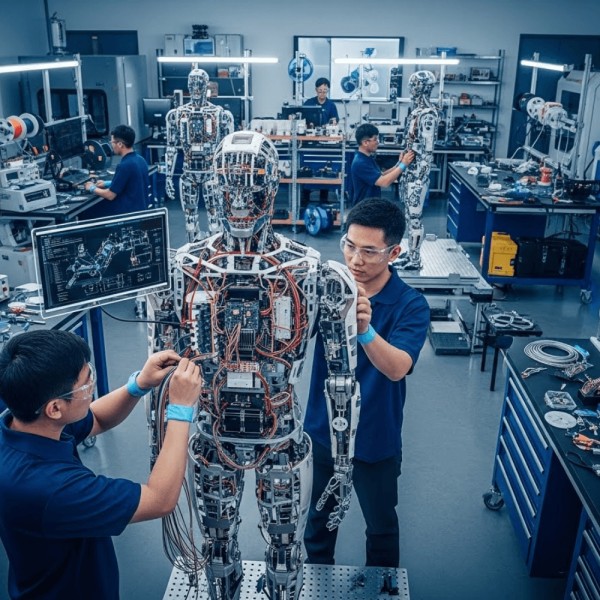
Humanoid robots generally require wiring systems that can be routed through joints, limbs, and articulated sections while maintaining consistent signal integrity and power delivery under continuous, repetitive movement. Cloom Tech’s work in this area draws on the company’s broader manufacturing experience across the automotive, robotics, medical device, and aerospace sectors, where wiring reliability under mechanical stress, vibration, and environmental variation is standard rather than the exception. The company’s design support process, which spans prototype development through to full production, has been extended to humanoid robotics projects to help manufacturers integrate wiring systems suited to the specific mechanical layout, joint configuration, and space constraints of individual robot platforms.
Engineering considerations for this category of work include selecting materials rated for high flex-cycle durability, configuring connectors for use in compact and densely packed robotic assemblies, and applying routing designs that reduce strain at points of repeated articulation, such as shoulder, hip, and knee joints. Cloom Tech has indicated that its engineering personnel typically work directly with client teams throughout the design phase, aligning wire harness specifications with the electrical architecture, actuator placement, and physical constraints of each robot model under development.
Ivy Zhao, Spokesperson for Cloom Tech, said the humanoid robotics sector presents wiring requirements that differ in several respects from more conventional industrial applications. “Humanoid robot platforms involve continuous joint movement within a tightly constrained internal space, so the wiring has to be engineered for flexibility, durability, and precise routing from the outset,” said Ivy Zhao, Spokesperson for Cloom Tech. “The work in this area has focused on producing harness assemblies that can withstand repeated articulation over an extended service life without compromising signal transmission or power delivery.”
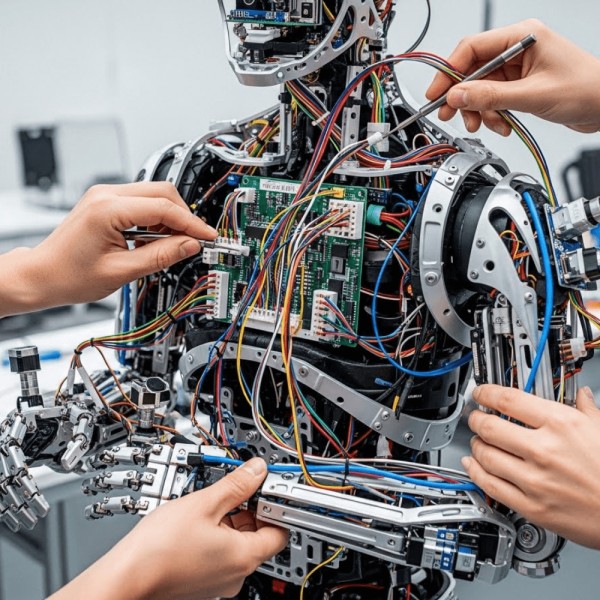
This collaborative design approach is consistent with practices already established across Cloom Tech’s other served industries, where custom wiring solutions are typically developed in coordination with client engineering teams rather than supplied as standardised, off-the-shelf components.
Testing procedures applied to humanoid robotics harnesses are intended to verify performance under repeated mechanical movement, helping to confirm that assemblies meet the durability expectations associated with long-term robotic operation. The company has noted that documentation and traceability are maintained throughout the design and production process, supporting manufacturers that require detailed records for their own quality assurance processes.
Looking ahead, Ivy Zhao, Spokesperson for Cloom Tech, said the company anticipates continued engagement with manufacturers operating in the robotics sector as humanoid platforms move further into development and, in some cases, early deployment. “As humanoid robotics platforms continue to be refined, wiring requirements are expected to become more specialised, and Cloom Tech anticipates ongoing collaboration with robotics manufacturers to support that development,” said Zhao. “Continued investment in design and testing capability is expected to remain part of the company’s approach to this segment of its manufacturing work.”
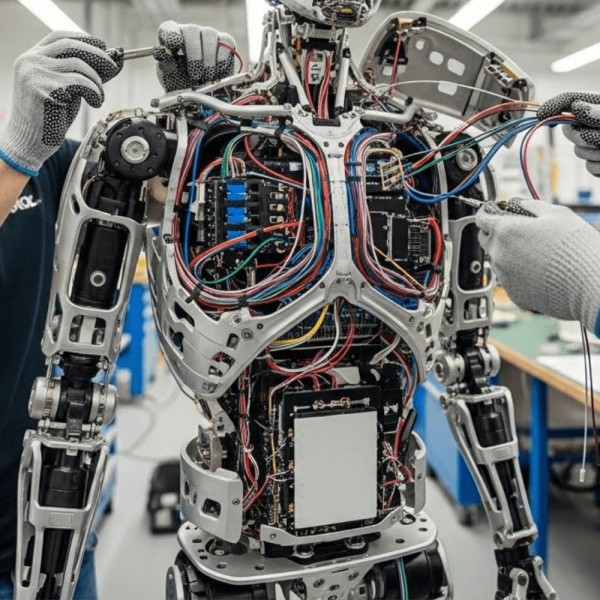
Cloom Tech manufactures custom wire harnesses and cable assemblies for a range of industries, including automotive, robotics, medical devices, and aerospace. The company’s services include design support from prototype through to production, with an emphasis on wiring solutions tailored to the mechanical and electrical requirements of individual client projects. The addition of humanoid robotics-focused wire harness development reflects the company’s continued work across sectors where custom wiring design is required to meet specific operational and mechanical conditions and forms part of its ongoing engagement with manufacturers operating in emerging robotics applications.
For additional information about humanoid robot wire harness solutions and related industry developments, contact Cloom Tech at 9251 NW 112th Ave, Medley, FL 33178, USA. Inquiries regarding the company’s products, services, installation support, and training programmes can be directed to +1 863 434 8447 or by email at sales@cloomtech.com.
Media Contact
Organization: Cloom Tech
Contact Person: Ivy Zhao
Website: https://cloomtech.com/
Email: Send Email
Contact Number: +18634348447
Address:9251 NW 112th Ave
City: Medley
State: FL 33178
Country:United States
Release id:47021
The post Cloom Tech Develops Custom Wire Harness Solutions for Humanoid Robotics appeared first on King Newswire. This content is provided by a third-party source.. King Newswire makes no warranties or representations in connection with it. King Newswire is a press release distribution agency and does not endorse or verify the claims made in this release. If you have any complaints or copyright concerns related to this article, please contact the company listed in the ‘Media Contact’ section
Disclaimer: The views, suggestions, and opinions expressed here are the sole responsibility of the experts. No Economymono journalist was involved in the writing and production of this article.