
 economymono_bz65a7
Virse enables packaging designers, DTC brands, and print account teams to map exported 2D box dieline layouts onto photorealistic 3D carton renders across kraft, matte, and gloss substrates on one visual canvas.
United States, 10th Nov 2026 – Virse provides packaging designers, direct-to-consumer (DTC) brand teams, and print account managers with a dedicated dieline to 3D render workflow inside its node-based Creative Canvas. Built to bridge the gap between flat vector layout files and client approval decks, the tool maps existing flat package artwork onto folded three-dimensional box and carton previews without requiring dedicated 3D modeling software.
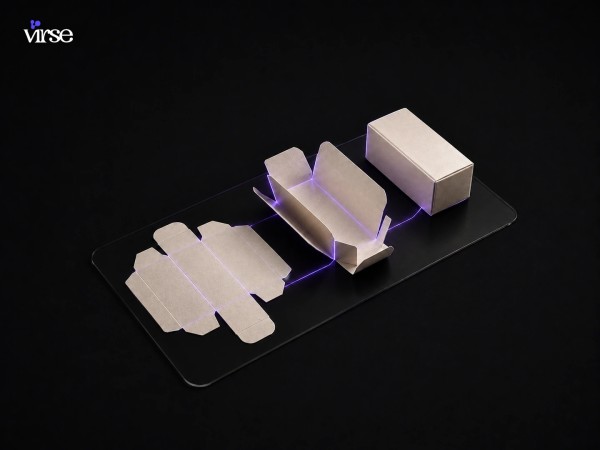
Anyone who has managed a consumer product launch knows how difficult it is for non-designers to read a flat packaging dieline on a monitor. To a structural designer or pre-press operator, the grid of trim lines, score folds, glue flaps, and inverted top tucks makes complete sense. To a startup founder, retail buyer, or marketing VP asking what is a dieline for the first time, that same flat file looks like an upside-down puzzle. Critical layout mistakes frequently hide in flat proofs: a hero illustration wraps awkwardly around a side crease, a nutrition panel sits too close to a bottom tuck flap, or a dark background color overwhelms the shelf presence once all four faces come together.
Traditionally, catching those visual issues before ordering a physical wet proof meant either folding a paper printout with tape at a desk or exporting UV textures into complex 3D rendering software, building studio lights from scratch, and waiting on long shader renders. Virse streamlines that step by letting designers run a dieline to 3d pass directly on the same visual canvas where they manage their brand assets and campaign photography.
Reading flat artwork, box geometry, and substrate finishes together
Unlike generic stock-template mockups that paste a single front label onto a pre-rendered white box, Virse’s workflow reads the user’s actual exported flat file so panel relationships stay faithful to the layout. When a designer drops a flat box dieline export onto the canvas, the tool combines three pieces of input to construct the preview: the exported 2D layout containing the front face, side gussets, top lid, and wrap-around graphics; plain-language specifications naming the package style and substrate finish; and an optional studio tabletop or retail shelf background photograph that guides shadow direction.
Designers can specify reverse tuck-top cosmetic cartons, corrugated e-commerce mailers, or two-piece rigid sleeve-and-base boxes alongside paperboard notes such as uncoated brown kraft, soft-touch matte lamination, or high-gloss spot UV highlights. Because Virse hosts 50+ AI models alongside its in-house aesthetic model on one infinite workspace, a packaging designer can generate multiple material studies from a single flat file and compare them side by side. One node can show a tea carton rendered in textured matte cotton board under warm morning light, while an adjacent node previews the exact same artwork on a glossy coated carton for e-commerce hero listings.
“Packaging teams lose days waiting for physical comp samples or 3D scene setups just to check whether a wrap-around graphic lines up across a corner fold,” said a spokesperson for Virse. “With Virse, a designer exports their flat artwork, specifies the carton style and paper stock, and puts a realistic 3d box mockup in front of the client in minutes.”
Connecting packaging previews to brand identity, surface prints, and color grading
In a working design studio, a packaging prototype render is part of a broader visual system. Virse’s node-based Creative Canvas keeps every upstream asset and downstream marketing visual connected so teams do not have to juggle files across separate apps.
When developing a new product line, designers can establish the core color palette, logo lockups, and typographic hierarchy in the brand kit generator, locking those rules into Virse’s Aesthetic Memory before laying out the carton panels. If a cosmetic box or specialty food wrapper calls for a decorative background motif, the team can pull a flat repeatable print from a fabric or paper sample using the workflow to extract pattern from image files and place that motif onto the flat dieline.
For products that require usage or assembly illustrations on the side or back panel, designers can convert a studio product snapshot into a crisp contour drawing via the photo to line art tool before exporting the final flat artwork. Once the 3D carton render is generated on the canvas, e-commerce teams can run a reference image color grading pass on the workspace to align the highlights and shadow warmth of the packaging render with their real-world lifestyle campaign photography.
Throughout the review cycle, Virse Composer stays available on the canvas to help teams test alternate studio backgrounds or lighting angles via conversational prompts, and approved renders can be stored in shared Asset Folders for retail pitch decks and Amazon or Shopify listing pages.
How to convert a dieline to a 3D packaging render
Packaging designers and brand managers follow a direct sequence on Virse. They export the completed 2D package layout from their vector editor as a clean PNG or JPG image, drop it onto the canvas, and note the carton structure and surface finish. Optionally attaching a studio surface or shelf reference photo guides perspective and shadow falloff. Running the render produces the folded 3D view on the canvas, where teams can branch nodes to compare matte versus gloss substrates side by side.
Virse maintains clear technical boundaries so packaging engineers and print buyers know where this tool sits in the production chain. The Dieline to Render workflow transforms an existing flat artwork file into a 3D presentation image. It does not generate structural die-cut templates from scratch, calculate flute folding allowances, export editable 3D meshes (such as OBJ or FBX files), or replace physical drop-test validation at the box plant.
Packaging studios, consumer goods founders, and print coordinators can preview their flat box layouts in 3D on virse.ai using 200 complimentary starter credits. Paid workspace tiers (Pro, Max, and Business) provide expanded monthly compute capacity and shared project folders for teams of up to 50 collaborators.
About Virse
Virse is a visual AI creative system architected by machine learning researchers and commercial designers with a collective track record of over 100 international design awards. Headquartered in Dover, Delaware, Virse brings 50+ specialized image models, Virse Composer, and Aesthetic Memory together on an interactive node-based canvas. Packaging agencies, e-commerce brands, and in-house studios rely on Virse to connect concept exploration, mockup rendering, and campaign production in one workspace.
Media Contact
Organization: Virse
Contact Person: Virse Media Relations
Website: https://www.virse.ai/
Email: Send Email
Country: United States
Release id: 50591
View source version on King Newswire:
Virse Turns Flat Packaging Dielines Into 3D Renders for Brand and Print Reviews
Disclaimer: The views, suggestions, and opinions expressed here are the sole responsibility of the experts. No Economymono journalist was involved in the writing and production of this article.